


The Data Nobody Talks About: Why You Still Can't Find Information About Art Gallery and Artist Studio Careers

What the few available reports say about working in art galleries and artist studios, and why the dissatisfaction you might feel with pay and workload is real and far more common than you think.
I periodically try to gather information, data points, and statistics that portray what working in galleries and artists’ studios actually entails: salary progression, advancement, benefits, the paths people’s careers follow and how often they are promoted. I do it because I care about my clients and want my knowledge to rest on more than my own memory of twenty-five years in the field, and every time it proves a difficult task.

What is available is a handful of reports, mostly from recruiters and professional associations, covering pay, satisfaction and the intention to leave, and almost nothing on what happens to the people who actually do.
Limited as they are, the sources all seem to point in the same direction. Satisfaction with pay keeps falling across the commercial art world, and in artists’ studios only 31% of employees were happy with their pay in 2024, down from 46% the year before. [1] The survey run with Artnet by AWITA, the Association of Women in the Arts, of which I am a member, found this year that half of women aged 35 to 44 are considering leaving the arts within five years, at the very age when they should be moving into leadership, and that those without a mentor are considerably more likely to go. [2] For an art market that directly employs an estimated three million people (a number that seems incredibly big to me, and that I am not sure I can even grasp) [3], a handful of reports published once every year or two [4] is very little, and most of what happens to those people goes unrecorded.
The art market, of course, is closely followed. This year many articles were written about Pace, which, as Artnet reported, is reducing its workforce from around 250 to 200 people and may part ways with as many as 50 of its artists. [5] A lot of attention also goes to the new Gen Z collectors, who, according to the Art Basel and UBS Survey of Global Collecting, now spend more than twice as much on art as any older generation [6]; to the great wealth transfer, with almost a trillion dollars in art and collectibles expected to change hands over the next decade, according to Deloitte [7]; and to new ways of selling art that bypass the traditional commercial gallery, from collectors buying directly from artists, as 69% of those surveyed have done [6], to dealers working without a permanent space. [8] All of these stories are about galleries, artists, collectors and money, and they leave the day-to-day reality of the people who work in these environments, among them the 50 Pace employees who no longer have a job, almost entirely overlooked.
Museums offer a useful comparison. Their workers, luckily, have been surveyed for years [9], and they have unions: this October, after voting to authorise strikes, the unions at the Whitney, the Brooklyn Museum, the Guggenheim and the American Folk Art Museum all secured new contracts [10], the Whitney’s including pay increases of at least 14.75% over four years. [11] Galleries and artists’ studios, to the best of my knowledge and research, have no unions and no clear progression structures, and they extend to employment conditions the same discretion that has always surrounded prices and transactions.
What emerges, for anyone willing to go and look for it, is that dissatisfaction is widespread across galleries and artists’ studios. Knowing this will not solve anything on its own, but it normalises what you are feeling: you are not being difficult or oversensitive, you are not an isolated case, and you are one of many people working in the same conditions. It also explains a good part of it, because spending years without benchmarks, without clear progression and without the protections that museum workers are starting to win makes it genuinely hard to judge your own situation, let alone plan your next step. The difficulties you have lived through, and the feelings that came with them, are real, and this is why I write about it: I lived it myself for many years, and the people who are living it now, you included, matter to me.
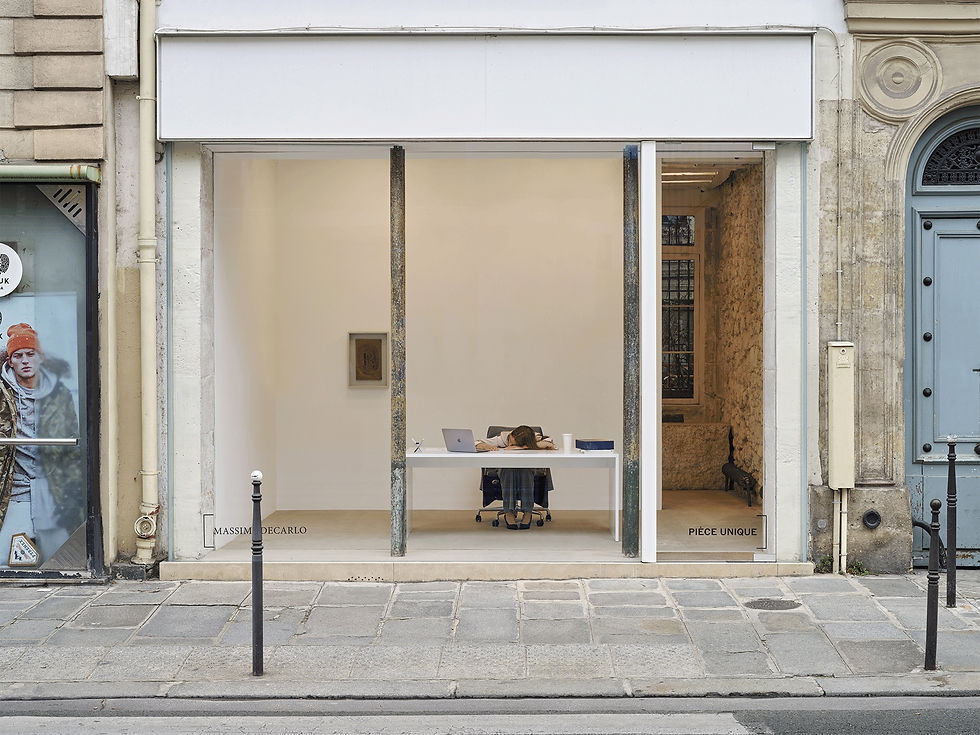
And if all of this leaves you confused, torn between your love for art, and for an environment you have always wanted to be part of, and what working in it actually entails day to day, to the point that you feel pressed by circumstances into making hard choices, you are in the same position as many of the women in the AWITA survey above, most of whom named a lack of recognition or adequate pay as their reason for considering leaving. [2]
I first wrote about this a year ago, and the reports and articles that have become available since have only confirmed the picture. I am personally very grateful to everyone who has taken the time to study and document what it is like to work in this field.
At the bottom of this article, you will find links to every report I mentioned, for anyone who wants to read them in full.
If you find yourself dealing with this reality and all the complex emotions that come with it, please reach out. You can book a free 30-minute virtual coffee with me. I was once one of you, and I became a coach because a coach was exactly the person who could have made my own next step far more serene, more thought through, and better planned than it actually was.
Sources
___
Welcome to How to Survive the Art World: stories you might recognise yourself in, ideas worth testing and, at times, a little irony, for anyone in a gallery or an artist’s studio who finds the workloads, the personalities and the pace harder to carry every year.
I work with contemporary art professionals who feel tired, unfulfilled, and stalled, and help them reclaim their time, energy and focus to make their careers meaningful and rewarding again, so that work is more than a trade of hours and soul for money.
My clients confidently and comfortably define their next steps; they rediscover their value beyond the chaos of the day-to-day and build a sustainable path forward that honours both their expertise and their wellbeing.
And if you need a quick fix, a few minutes of switching off, thinking about nothing, mental bubble-wrap popping, try 216: lucesibilla.com/216-gateway
Reach out to me for a free virtual coffee if you recognise yourself in my words: book it here


